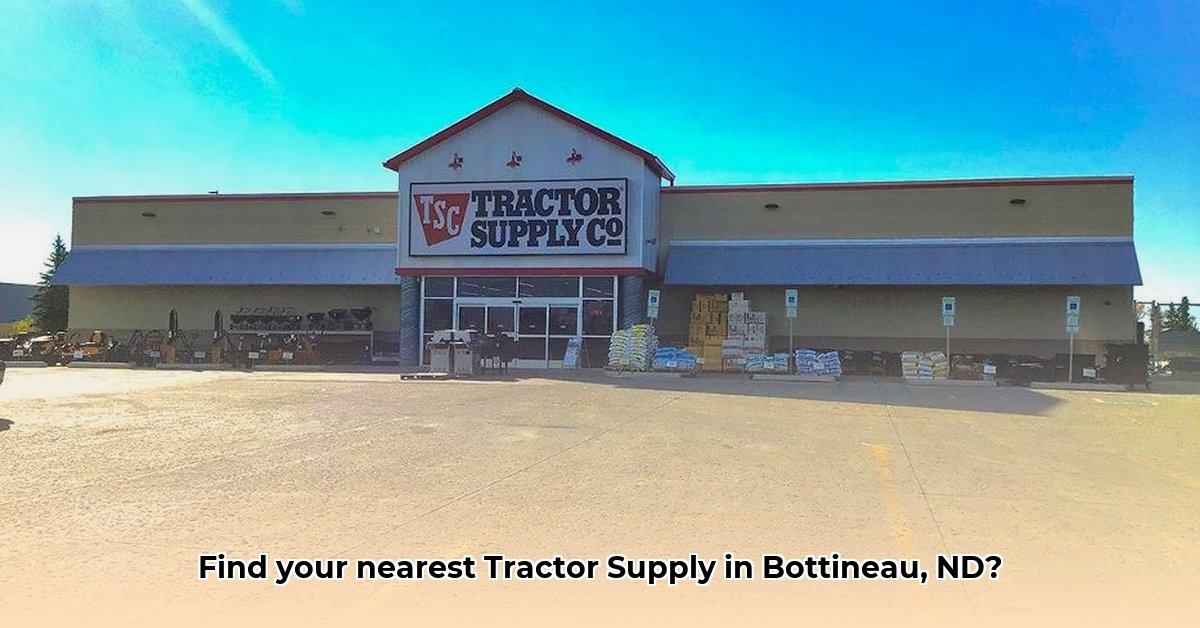
Tractor Supply in Bottineau, North Dakota: A Data-Driven Analysis
Tractor Supply Company (TSC) plays a significant role in North Dakota's agricultural landscape, providing essential supplies and services to farmers, ranchers, and rural communities. This article analyzes TSC's presence in North Dakota, using the Bottineau store as a case study to understand its operational strategies and broader impact. We will explore its geographic distribution, operational efficiency, and address crucial data gaps to inform future decision-making for TSC management, local farmers, and the community at large. For another North Dakota location example, see the Dickinson store page.
Geographic Distribution and Accessibility
Tractor Supply stores are strategically located across North Dakota, aiming for proximity to major roadways and agricultural communities. While the exact network density is currently unavailable, mapping the locations (data not provided here) would reveal accessibility patterns and potential underserved areas. The Bottineau store's advantageous location suggests a focus on maximizing reach within its region. However, a comprehensive assessment of the entire network requires further analysis of store locations and their proximity to customer bases. This would determine whether the current distribution effectively serves all regions.
Operational Analysis: Bottineau as a Case Study
The Bottineau Tractor Supply store operates with extended hours (8:00 AM to 9:00 PM), suggesting a response to high demand, likely driven by the needs of local farmers and ranchers with unpredictable schedules. This strategy aims to maximize sales opportunities and cater to customer convenience. However, this case study offers limited generalization about other TSC locations in North Dakota. A more extensive investigation covering several stores, including an analysis of sales figures, inventory turnover, and customer traffic patterns, would greatly enhance the understanding of TSC's operational effectiveness statewide. Do these extended hours translate into higher sales and customer satisfaction across all stores? Further research is needed to definitively answer this question.
Data Gaps and Future Research
A significant limitation of this analysis stems from the lack of comprehensive data on TSC's North Dakota network. Key performance indicators (KPIs), such as revenue per store, customer acquisition costs, and return on investment (ROI) for individual stores, are crucial for accurate evaluation. Future research should focus on gathering this data, which would allow for a detailed cost-benefit analysis of the current store network. The absence of this information significantly restricts the ability to provide actionable insights for improvement.
Actionable Insights for Stakeholders
Based on the available information, here are actionable insights for various stakeholders:
TSC Management: Invest in robust data collection systems to monitor individual store performance. Implement targeted marketing campaigns based on local needs and consumer behavior. Consider loyalty programs to encourage repeat business. Analyze peak demand periods and adjust store staffing accordingly.
North Dakota Farmers: Actively provide feedback to TSC regarding product selection and store services. Advocate for improved accessibility in underserved areas. Communicate specific needs and preferences to TSC management.
Bottineau Residents: Support the local Tractor Supply store to ensure its continued success within the community. Share feedback on your shopping experience to help improve services and products.
Risk Assessment
TSC faces several potential risks in North Dakota:
Reduced Customer Traffic: Mitigated through targeted marketing, loyalty programs, and improved customer service.
Supply Chain Disruptions: Mitigated through diversification of suppliers, strategic inventory management, and robust supplier relationships.
Increased Competition: Mitigated through competitive pricing, exceptional customer service, and unique product offerings.
Economic Downturn: Mitigated through cost optimization, operational efficiency improvements, and adapting to changing consumer demand.
Regulatory Considerations
TSC must comply with all relevant North Dakota state and federal regulations pertaining to sales tax, labor laws, environmental regulations, and consumer protection. Failure to comply can lead to significant penalties and damage TSC's reputation. Consistent monitoring and proactive compliance are vital.
Conclusion
Tractor Supply Company's presence in North Dakota is undeniably important to the state's agricultural economy and rural communities. However, optimizing its operations and fully realizing its potential requires a data-driven approach. Addressing the current data gaps through comprehensive data collection and analysis is critical for informed decision-making regarding store location strategy, operational efficiency, marketing, and risk mitigation. Continued research and data analysis will allow for more precise evaluations and strategic decision making, benefiting both TSC and the communities it serves.